

Starting a high fiber diet is easy for a week. Keeping it going is the hard part. The NHS puts the adult target at 30g of fibre a day and says most adults eat an average of about 20g. That leaves a gap of roughly 10g a day. Seen that way, maintaining a high fiber diet stops being a total overhaul. It means finding 10 extra grams that you will still be eating next month.
What 10 grams looks like
The figures below are worked out from USDA FoodData Central values per 100g and the portion weights it lists. Your own food will vary. The NHS makes the same point: fibre content "can depend on how it is made or prepared and on how much of it you eat."
| Food and amount | Fibre per 100g | Fibre in that amount |
|---|---|---|
| Lentils, boiled, half a cup (99g) | 7.9g | about 7.8g |
| Pear, one medium (178g) | 3.1g | about 5.5g |
| Apple with skin, one medium (182g) | 2.4g | about 4.4g |
| Oats, dry, 40g | 10.1g | about 4.0g |
| Potato baked with skin, one medium (173g) | 2.2g | about 3.8g |
| Brown rice, cooked, one cup (202g) | 1.6g | about 3.2g |
| Deglet Noor dates, 30g | 8.0g | about 2.4g |
| Medjool dates, 30g | 6.7g | about 2.0g |
So the gap can close in more than one way. A 40g bowl of oats, a medium apple and 30g of Deglet Noor dates add up to about 10.8g. A pear and half a cup of lentils give about 13.3g, which is more than the gap on their own. The NHS also suggests mixing sources: "eating too much of one type of food may not provide you with a healthy balanced diet."
Make the extra grams automatic
Build the fibre into things you already buy. The NHS list works well as a shopping list. It suggests a higher-fibre breakfast cereal or porridge, wholemeal or granary bread, wholewheat pasta, bulgur wheat or brown rice, and potatoes with their skins on. It also suggests adding beans, lentils or chickpeas to stews, curries and salads. Swapping one item on that list is a change you make once at the shop, not every morning.
Labels help you keep it up when you try a new product. According to the NHS, "High-fibre foods have 6g or more of fibre in every 100g." Both dates in the table pass that line. Medjool, at 6.7g, only just passes. A cooked potato or a cup of brown rice falls below it but still adds a few grams.
Water goes with it
The NHS digestion page says "Fibre acts like a sponge, absorbing water." Its practical tip is to drink a glass of water with every meal. That is easy to tie to the fibre habit. More fibre on the plate, one glass next to it.
Where dates belong in the day
Dates are an easy way to top up, but the NHS fibre page adds a condition for dried fruit. It is sticky and can raise the risk of tooth decay, "so it's better if it is only eaten as part of a meal, rather than as a between-meal snack." It suggests fresh or dried fruit for dessert. In practice that means chopping dates into the morning oats or serving a few after dinner, instead of nibbling them through the afternoon.
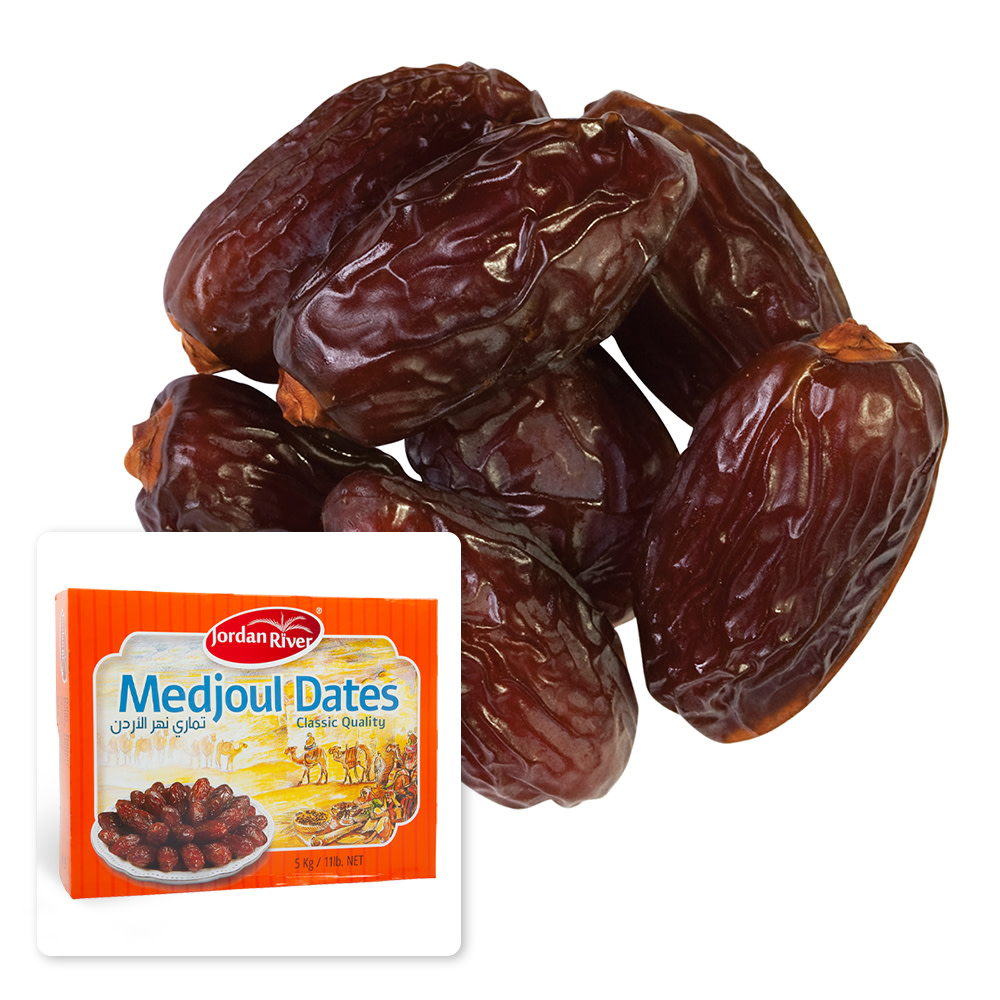
Piarom, the dark, semi-dry date from Iran with thin skin, has no record in FoodData Central, so we haven't given a fibre figure for it. The Deglet Noor and Medjool rows describe those two varieties, not Piarom. Readers comparing dates in Malaysia can also look at Harga Kurma Malaysia.
More food reading is on the blog. More about this site is on the About Us page and the contact page.