

Various reasons can increase the risk of high blood pressure. The NHS lists an unhealthy diet (especially one high in salt), being overweight, smoking, drinking too much alcohol, long-term stress, age and family history among the things that raise your chances. Below we go through the main causes this article has always covered and check, cause by cause, what dates can and cannot do, using published studies rather than folk claims.
This article is general information, not medical advice. If you have high blood pressure, kidney disease or take regular medicine, talk to your doctor before changing your diet.
What studies on dates and blood pressure actually found
Few standardised human trials have measured blood pressure in people eating dates. In a 2022 randomised trial in Bahrain, 79 adults with type 2 diabetes ate either 60 g of dates or 60 g of raisins a day for 12 weeks; 61 finished the study. There was no difference between or within the groups for systolic or diastolic blood pressure, and the authors saw no beneficial effect of dates on the other cardiovascular measures they checked.
A 2025 review was more upbeat. Its authors concluded that regular, moderate date eating can reduce systolic and diastolic blood pressure, but they also pointed to differences between cultivars and ripening stages and to the small number of standardised human trials, and called for larger randomised studies. An earlier systematic review of date palm clinical trials found 26 studies, of which 38% were randomised controlled trials and 80% had performance and detection bias. It concluded there is not enough clinical evidence to back many of the health effects claimed for dates.
So the evidence is mixed: the trial above found no change, and the review that reports a benefit says larger randomised studies are still needed. What dates can do is fit into the kind of diet that health bodies recommend, as the sections below explain.
Weight
Being overweight is one of the NHS risk factors, and losing weight if you are overweight is one of its main tips for lowering blood pressure. Dates are not a weight-loss food, though. USDA data put Medjool dates at 277 kcal per 100 g and Deglet Noor dates at 282 kcal per 100 g. In a 16-week trial of 100 adults with type 2 diabetes, eating three dates a day did not change body mass index in a statistically significant way.
If you are watching your weight, count dates as part of your daily calories. Our page on calories in an average-sized date helps with portion sizes.
Cholesterol in the arteries
The NHS explains that too much cholesterol can block your blood vessels and makes heart problems or a stroke more likely. This sweet fruit contains no cholesterol: USDA lists cholesterol at 0 mg for Deglet Noor dates.
Whether dates lower blood cholesterol is less clear. In the three-dates-a-day trial above, total cholesterol fell by 0.209 mmol/L over 16 weeks in the group eating dates. A 2025 meta-analysis pooled four studies with 298 people with type 2 diabetes and found a reduction in total cholesterol, but no significant change in LDL, triglycerides or HDL, with high variation between studies. The 60 g-a-day Bahrain trial found no change in blood lipids at all. The meta-analysis authors asked for larger, better-controlled studies.
Smoking
Smoking is on the NHS list of things that raise your chances of high blood pressure, and “do not smoke” is one of its lifestyle tips. None of the date studies cited here tested whether dates, Kurma Madu Green Diamond included, protect the lungs or undo the effects of smoking. Stopping smoking is the step that counts; the NHS points smokers to free quit-smoking support.
Salt, potassium and the role of dates
The World Health Organization says the main health effect of a diet high in sodium is raised blood pressure, and recommends that adults eat less than 2,000 mg of sodium a day (under 5 g of salt, just under a teaspoon).
Potassium works on the other side of that balance. A 2013 meta-analysis in the BMJ pooled 22 randomised trials with 1,606 participants and found that higher potassium intake lowered systolic blood pressure by 3.49 mmHg and diastolic by 1.96 mmHg in adults. The effect was seen in people with high blood pressure, not in those without it. Those trials looked at potassium intake in general, not at dates.
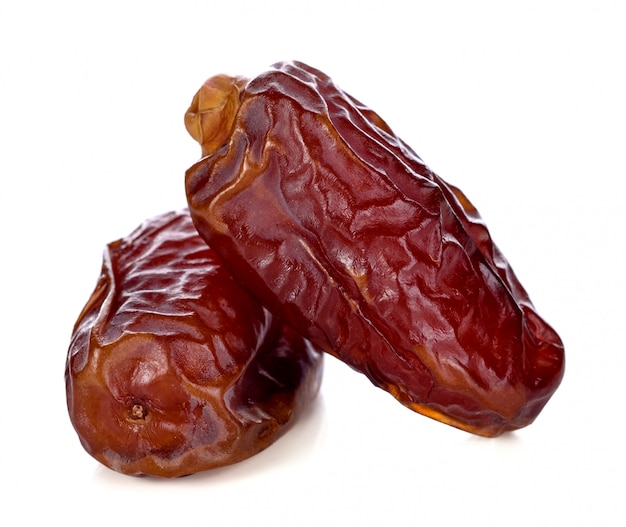
Dates are a good potassium source with almost no sodium. USDA lists Medjool dates at 696 mg potassium and 1 mg sodium per 100 g, and Deglet Noor at 656 mg potassium and 2 mg sodium. One caution: the NHS notes that people with chronic kidney disease can develop high blood potassium (hyperkalaemia) because their kidneys do not work properly, so anyone with kidney problems should ask their doctor about potassium-rich foods.
Fat in the diet
The WHO counts a diet high in saturated fat and trans fats among the risk factors for high blood pressure, along with low intake of fruits and vegetables. Dates are free of trans fats: USDA lists them at 0 g, with total fat of 0.15 g per 100 g for Medjool and 0.39 g for Deglet Noor. Protein is also low, at 1.81 g and 2.45 g per 100 g.
Fitting dates into a blood-pressure-friendly diet
Swapping a salty snack for a few dates cuts sodium and adds potassium, which matches the WHO and NHS advice above. Because dates are sweet and calorie-dense, a small handful is a sensible portion rather than a free-for-all. Our guide to managing date consumption for better health covers sugar and portions, and people with diabetes can read diabetic-friendly diets with dates. For the variety itself, see our Iranian Piarom page.
References
- NHS. High blood pressure. nhs.uk/conditions/high-blood-pressure
- Butler AE et al. Effect of date fruit consumption on the glycemic control of patients with type 2 diabetes: a randomized clinical trial. Nutrients 2022;14(17):3491. PMID 36079749
- Jim EL et al. Nature's cardioprotective sweetness: a review of dates as functional food in hypertension. Foods 2025;14(24):4208. PMID 41464915
- Bagherzadeh Karimi A et al. Clinical effects of date palm (Phoenix dactylifera L.): a systematic review on clinical trials. Complement Ther Med 2020;51:102429. PMID 32507440
- Alalwan TA et al. Effects of daily low-dose date consumption on glycemic control, lipid profile, and quality of life in adults with pre- and type 2 diabetes: a randomized controlled trial. Nutrients 2020;12(1):217. PMID 31952131
- Mirghani HO, Alhowiti A. Dates fruit effects on dyslipidemia among patients with type-2 diabetes mellitus: a systematic review and meta-analysis of randomized trials. Pak J Med Sci 2025;41(1):331-337. PMID 39867809
- Aburto NJ et al. Effect of increased potassium intake on cardiovascular risk factors and disease: systematic review and meta-analyses. BMJ 2013;346:f1378. PMID 23558164
- USDA FoodData Central. Dates, medjool (FDC 168191) and Dates, deglet noor (FDC 171726). 168191, 171726
- NHS. High cholesterol. nhs.uk/conditions/high-cholesterol
- NHS. Chronic kidney disease: treatment. nhs.uk/conditions/kidney-disease/treatment
- World Health Organization. Sodium reduction (fact sheet). who.int
- World Health Organization. Hypertension (fact sheet). who.int